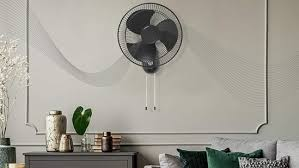
Wall fans are a practical cooling solution for homes, offices, and commercial spaces. They provide effective air circulation while saving floor space. With many models available, choosing the right one can be challenging. Understanding key features can help in selecting a fan that meets specific needs.
- Blade Size and Sweep
Blade size and sweep determine the airflow capacity of a wall fan. The sweep refers to the diameter covered by the blades when in motion. Fans typically have a sweep size between 300mm and 450mm. A larger sweep means better air circulation, making it ideal for bigger rooms.
- Air Delivery and Speed Settings
Air delivery is measured in cubic meters per minute (CMM) or cubic feet per minute (CFM). A higher value means better airflow. Fans with multiple speed settings allow users to adjust airflow based on comfort needs. A high-speed motor ensures strong air delivery, especially in larger spaces.
- Oscillation and Adjustable Angle
Oscillation helps distribute air evenly across a room. A fan with a wide oscillation range can cover a larger area. Some models also offer adjustable tilt angles, allowing users to direct airflow as needed. These features enhance comfort, especially in shared spaces.
- Motor Efficiency and Power Consumption
The motor is the core component of a wall fan. Copper-wound motors tend to be more durable and efficient compared to aluminum alternatives. Energy-efficient motors, such as brushless DC motors, consume less power while maintaining strong performance. Fans generally consume between 50W and 75W, with energy-saving models using even less. Choosing an efficient motor can reduce electricity costs over time.
- Noise Level and Stability
A noisy fan can be distracting, especially in bedrooms or workspaces. Low-noise motors and well-balanced blades help reduce operational sound. When you order wall fans, check for models that come with vibration control features to ensure stable performance. Checking for noise ratings can help in selecting a quieter option.
- Build Quality and Durability
The materials used in a wall fan affect its durability. Metal-blade fans tend to be more robust and long-lasting, while plastic-blade fans are lightweight and less prone to rust. A strong outer casing and protective grill enhance safety and durability.
- Remote Control and Smart Features
Modern wall fans offer convenience through remote control operation. Features like timer settings, multiple modes, and smart connectivity allow users to control the fan without manual adjustments. These options add flexibility, especially in large rooms or offices.
- Easy Installation and Maintenance
A fan with a simple mounting system makes installation easier. Removable grills and accessible components simplify cleaning and maintenance. A model with a dust-resistant design requires less frequent cleaning.
- Safety Features
Wall fans should have safety features such as a strong grill to prevent accidental contact with blades. Overheat protection can help prevent motor damage in case of prolonged use. A sturdy mounting bracket ensures secure placement.
- Energy Efficiency and Eco-Friendly Design
Energy-efficient fans help reduce electricity bills while being environmentally friendly. Models with energy-saving certifications or eco-friendly materials contribute to sustainability. Some fans also come with sleep modes or auto shut-off functions to conserve energy when not in use.
- Design and Aesthetic Appeal
While performance is a priority, the design of a wall fan should also complement the room’s interior. Sleek and modern designs blend well with home or office decor. Compact and lightweight models are ideal for smaller spaces where aesthetics matter.
- Price and Warranty
Comparing prices and warranty terms helps in finding the best value. While budget-friendly options are available, investing in a durable and energy-efficient model can be more cost-effective in the long run. A longer warranty period often indicates better product reliability.
Conclusion
Choosing the right wall fans involves considering factors like airflow capacity, motor efficiency, noise levels, and additional features. A well-built and energy-efficient fan can provide lasting comfort and performance. Understanding these key aspects helps in making an informed purchase.