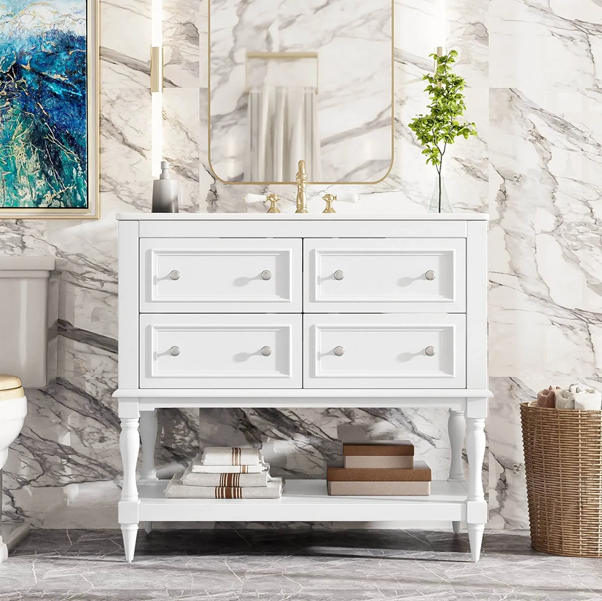
In recent years, Shaker-style bathroom vanities have become popular for homeowners looking to create a stylish, timeless bathroom. With their clean lines and simple, functional design, these vanities bring both charm and practicality to a space. But just because it looks appealing doesn’t mean it works for every bathroom. In small spaces, it may feel cramped; for those who need maximum storage, it might not be sufficient.
This article breaks down the design, space requirements, and lifestyle considerations of Shaker-style vanities, helping you decide whether it’s the right fit for your home.
First, Understand What a Shaker-Style Vanity Really Is
Before you decide, it’s important to understand the essence of a Giving Tree Shaker-style vanity. Unlike modern designer pieces, Shaker-style is driven by timeless aesthetics, with clear advantages and limitations.
Core Design: Clean Lines + Functional Simplicity
Shaker-style vanities are inspired by the Shaker furniture movement, emphasizing simplicity, craftsmanship, and minimal ornamentation. Key features include:
- Panel design: Typically features recessed cabinet panels and straightforward geometric lines, creating a clean, orderly look.
- Floating or freestanding options: Some Shaker vanities are wall-mounted, leaving 6–8 inches (15–20 cm) of clearance for easier floor cleaning, while others remain freestanding for traditional appeal.
This design moves away from overly ornate or boxy vanities, making the Shaker-style vanity a versatile centerpiece in bathrooms, especially for those seeking a balance of style and practicality.
Pros and Cons: Beyond the Look
Advantages:
- Classic and timeless, easily complementing French, modern, or cottage-style interiors.
- Floating versions simplify floor cleaning and reduce dust accumulation.
- Smooth edges and simple structure reduce bumping hazards, ideal for homes with children or seniors.
Drawbacks:
- Counter space may be limited. Compared with rectangular modern vanities, some Shaker designs lose 10–15% of surface area due to paneling and design constraints.
- Storage may be minimal. Floating cabinets often feature simple layouts with fewer compartments.
- Installation requirements. Floating units need reinforced walls for support (≥110 lbs / 50 kg) and precise plumbing planning.
- Higher cost for custom features. Detailed craftsmanship or premium materials can cost 30–50% more than standard rectangular vanities of the same size.
When a Shaker-Style Vanity Works Best
Shaker-style vanities shine in these situations:
Bathroom size ≥ 85 sq. ft. (8㎡) with a regular layout
- For single-basin units, reserve 32–40 inches (80–100 cm) of wall space.
- For double-basin units, bathroom width should be at least 6 feet (1.8 m).
- Square or rectangular layouts harmonize with the clean lines; odd angles or pipe protrusions can create visual tension.
You love classic, cozy, or soft styles
Shaker vanities work best in interiors that appreciate timeless or gentle aesthetics:
- French country: Pair wood Shaker vanities with brass faucets for a refined, elegant atmosphere.
- Creamy or pastel palettes: White or soft-colored stone tops with floating cabinets create a warm, soft vibe.
- Modern luxury: Sintered stone countertops and subtle metal trims add sophistication.
Avoid pairing with ultra-minimalist, industrial, or wabi-sabi interiors, where ornate or soft lines may clash with raw, minimalist elements.
You don’t need heavy storage
Best for users who keep countertops tidy:
- Just a few daily-use items like a toothbrush cup or lotion bottles.
- Most items stored in a mirrored cabinet or nearby storage.
- Countertop left mostly open for decorative touches.
Safety and easy cleaning are priorities
Homes with children or seniors benefit from Shaker-style simplicity:
- Smooth edges reduce bumping hazards.
- Floating cabinets allow robot vacuums or easy mopping underneath.
- Straightforward lines avoid dust traps, making cleaning effortless.
When to Think Twice: 3 Scenarios to Avoid
In some situations, a Shaker-style vanity may not be the best choice, potentially causing inconvenience rather than enhancing the space:
Small bathrooms ≤ 65 sq. ft. (6㎡) or narrow layouts
- Space constraint: In bathrooms under 65 sq. ft., even a 28-inch (70 cm) Shaker vanity can dominate the room, leaving minimal usable countertop space.
- Narrow passageways: For bathrooms less than 4 feet (1.2 m) wide, the vanity’s depth may further reduce walking space, making movement awkward.
High storage needs or “cluttered countertop” habits
- Shaker vanities, especially floating versions, often have minimal drawers and compartments, limiting organization.
- Countertop space may be restricted by the cabinet design, making it harder to place organizers or multiple bottles.
Tight budget or plans to renovate in the near future
- Cost factor: Standard Shaker vanities with engineered stone tops and wood cabinets range from $400–$800 (or higher for premium materials). High-end versions with sintered stone or smart mirrors can exceed $1,000—30–50% more than a standard rectangular vanity of the same size.
- Renovation challenge: Floating Shaker vanities require reinforced walls and precise plumbing. Switching styles later means costly wall modifications and pipe adjustments. Rectangular freestanding vanities are simpler to replace.
Quick Self-Test: 3 Questions to Decide
Still unsure? Ask yourself these three questions to determine if a Shaker-style vanity fits your space and lifestyle:
Is my bathroom at least 85 sq. ft. (8㎡) with a regular layout?
- Yes → Next question
- No → Consider a standard rectangular vanity instead
Does my design style lean toward classic, cozy, or romantic, and do I keep countertops tidy?
- Yes → Next question
- No → Reconsider
Is my budget sufficient (single-basin ≥ $400) and am I not planning renovations soon?
- Yes → A Shaker-style vanity is a good fit
- No → Better to choose an alternative
Conclusion
The core value of a Shaker-style bathroom vanity lies in timeless beauty and understated elegance. It can elevate a bathroom from a purely functional space to one with warmth and visual appeal—but only if your bathroom size, style, storage needs, and budget align with its design.
- If you have enough space, favor a cozy or romantic aesthetic, and don’t need heavy storage, a Shaker-style vanity becomes a highlight of your bathroom.
- If your bathroom is small, requires more storage, or has budget constraints, blindly choosing this style risks creating a “looks good but impractical” scenario. In such cases, consider a Giving Tree Home wall-mounted vanity, which offers space-saving efficiency without compromising style.
Home design is never about chasing trends—it’s about matching your space and lifestyle. Only when a product fits your daily habits and space perfectly can it truly enhance your quality of life.